Equipping Leaders Where They Are
Sydni Watts was finishing her undergraduate degree from Ouachita Baptist University. She wasn’t sure what was next after graduation. “I wanted to be heavily involved in ministry for the rest of my life,” she says. For people like Sydni, the next logical step was leaving home to attend seminary, most likely out of state.
Then, on a random Wednesday, her pastor texted her. “You should try this class tonight.” That was it. No explanation. Sydni was intrigued and drove from the OBU campus in Arkadelphia to her church (South City Church) in Little Rock that evening.
The class, a study in Acts through the Antioch School, explored the patterns that the Apostles used to plant, establish, and multiply churches. “It helped remove the Western, traditional church lens from Acts that I was unintentionally reading into it and helped me see it through more of a first-century perspective,” Sydni says.
When Sydni got home that night, she felt like her eyes had been opened. She had never read her Bible like that before. She kept making the drive every week to be a part of the class. After she graduated from college, she enrolled at the Antioch School for Church Planting and Leadership Development and moved to Little Rock to pursue her master’s degree.
A New Generation of Leaders
Sydni represents a new generation of leaders who are rediscovering the patterns of the early church, when the gospel spread through simple, reproducible communities. Before churches became institutions of programs and buildings. Before theological training moved off-site and out of the local church. There were first-century believers living and learning in community by the way of Christ and His Apostles.
The Antioch School is training leaders by looking back to move forward in a rapidly changing world. “The church in America is facing a large cultural shift, and we need foresight in how to handle that,” Sydni says. “We need to revamp and not just do what our parents did. Not that what they did was wrong at the time, but it’s not working anymore.”

One Challenge That Changed Everything
Dee Brown has spent over 30 years in consulting and engineering. Today, he is the Arkansas Chair of C12 Business Forums, facilitating peer advisory groups and executive coaching for Christian CEOs and business owners. He is also a Fellow at the Colson Center for Christian Worldview. In February, he received a master’s degree from the Antioch School and is currently working toward a doctorate degree.
For decades, Dee was active in his faith and served in leadership at his church. But it wasn’t until he was 38 years old that he realized something. “I remember being challenged, ‘Now, you guys know how to make disciples, right? Do you know what you would do and how you would do it?’ I thought, ‘I’ve been in church a long time, but I don’t know that I actually have a strategy for how to do that,’” Dee says.
That moment put Dee on a new path of learning with the Antioch School. “I really wanted to hone my skills and thinking. I wanted to be confident in leading people on a spiritual journey together. I wanted to do it right. Don’t we want to be good at that?”
Outdated Models That Aren’t Working
Within Dee’s industry, engineers are expected to be trained and skilled in engineering. No one would trust an engineer to build a bridge who hasn’t demonstrated competency in their work. Dee wondered, “How is it that we accept those expectations in other areas like vocation, but don’t apply that same standard to training leaders in our churches?”
In his article “Educated Clergy, Uneducated Laity,” Edward Farley writes:
Why is it that the vast majority of Christian believers remain largely unexposed to Christian learning—to historical-critical studies of the Bible, to the content and structures of the great doctrines, to two thousand years of classical works on the Christian life, to the basic disciplines of theology, biblical languages, and Christian ethics? Why do bankers, lawyers, farmers, physicians, homemakers, scientists, salespeople, managers of all sorts, people who carry out all kinds of complicated tasks in their work and home, remain at a literalist, elementary school level in their religious understanding? (1)
One of the biggest issues facing the American church today, according to Dee, is that we’re training leaders with outdated models. “Our culture is shaping us more than we realize,” Dee says. “Part of the challenge for church leaders is to recognize the cultural waters we’re swimming in. If we’re thinking of church as a concert and a TED talk, how are we actually helping people understand how to live out their faith in a crazy culture? It’s not 1980 anymore. It’s certainly not 1950s Mayberry America anymore, when most people had some biblical foundation, and there was an agreed-upon morality for how we should live this out.”

Equipping the Saints
In 2020, the National Study on Disciple Making in USA Churches found that fewer than 5% of churches in the US have a reproducing disciple-making culture. The solution put forth by the study is for churches to return to the way of Christ and His Apostles to “equip the saints for the work of ministry, for building up the body of Christ” (Ephesians 4:12).
We need to return to Jesus-style disciple-making and embrace strategies that inspire and empower everyday Christians to become disciple-makers. We need simple, effective, and reproducible models that will produce successive generations of disciplemakers if followed. (2)
“We need a lot more trained leaders and less professionals doing ministry, less distance between clergy and laity,” says Sydni. South City is one of many churches in Central Arkansas that has adopted the Antioch School’s approach to leader equipping. “We’ve gotten a lot of people at South City who don’t know what they want exactly. They’ve done traditional ministry and didn’t love it, or got chewed up and spit out.” What people experience at the church is hands-on training for ministry. Church members are trained to lead City Groups, lead Discovery Bible Studies for new believers, lead communion, and lead worship.
“You’re going to be trained on how to do these things, and you can use these tools anywhere you go,” Sydni says. “The more that we get to know one another, the more we’re going to sharpen each other.” The goal, she says, is to get people to realize that they don’t have to rely on their pastor to start a young adults group or minister to the widows at the church.
Ministry Training in Real Life
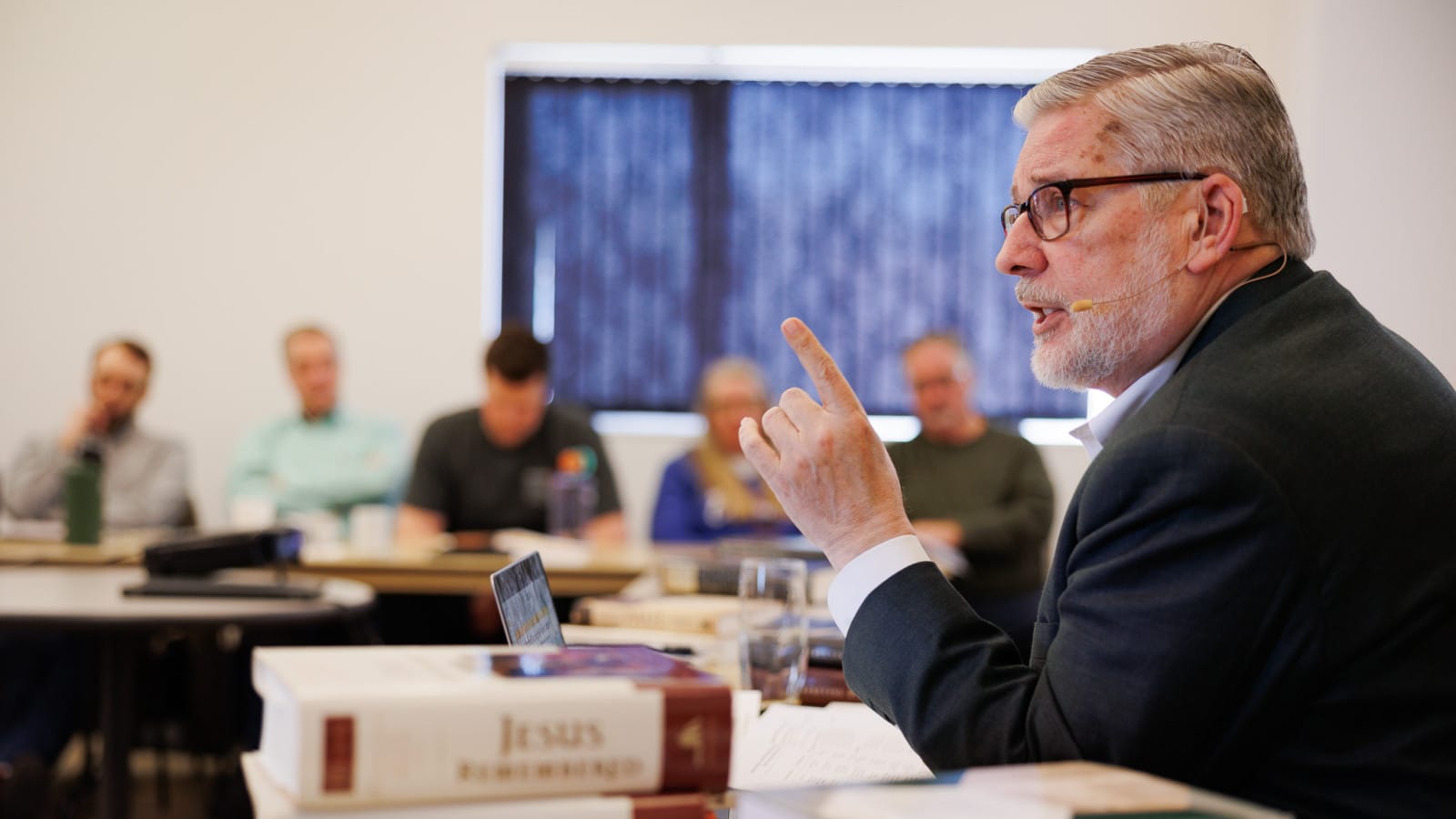
The Antioch School’s church-based training takes place where ministry happens: in the context of real church communities. Students stay rooted in their local church while gaining the biblical and theological depth they need to lead effectively. Theological concepts they study connect to real-world experience and application. Cohort discussions wrestle with the challenges leaders are currently facing in their churches. Coursework not only helps students grow academically but also makes them more effective in their local ministry.
“I know there are a lot of online programs, but there’s something powerful about doing this locally among churches and leaders working together,” Dee says. “Dialogue in community is one of the best ways people have learned for thousands of years. That’s why I believe CityChurch Network has a responsibility to keep this program alive and in front of as many church leaders through relational connections in a citywide movement to move the gospel forward.”
“I was taking Antioch’s Pauline course on establishing local churches,” Sydni says. “As I was going through it, I felt convicted that I needed to launch a new City Group. The one I was in was maxed out. We couldn’t fit in people’s homes. It’s easy to get in that small group mindset and say, ‘Let’s hang out forever in our little Holy Supper Club.’ I had been waiting around for someone else to do it. It was just developing that awareness that I can do this, and this is what the Lord has called me to do. So, last summer, we started four people. Now, we have 12. That couldn’t have happened in my previous group.”

Raising the Standard
For Sydni, what matters more than growth in numbers is what it produces in people’s character. “When you recover the mindset that the church is a family, then your heart as a leader should be that the people you’re bringing up reach spiritual maturity and are able to raise their own families,” Sydni says. “That’s a parent’s heart for their child. If your child never left the house because you didn’t give them the tools they needed to leave your house, you would feel like a failure. What if we raised the standard that everyone should reach maturity, that everyone should be participating in ministry?”
“The Antioch School has helped me develop an awareness of how to practically do ministry,” Sydni says. “What I get out of my classes is actually studying and praying that what I see in the New Testament is true of my church. That we structure our church so that we can live out the ‘one anothers.’ That people are trained to do those things that we see in scripture.”
“Through church partners, we’ve already trained over 2,500 people in the essentials of the faith with the goal of training 10,000,” Dee says. “We’re gaining momentum. We’re helping churches see that there needs to be a discipleship pathway that is built around the First Principles of the faith. We’ve got a problem in our culture, and we need to start addressing the fragmentation in the Church and how to get back to real unity.” The Antioch School’s church-based theological training is helping to do that.
The Antioch School is one of several church-based training programs available to leaders in Arkansas. It offers accredited degree programs from certificate to doctorate, but its courses are available to church leaders at every level, from pastors to elders to Sunday school teachers and laypeople.
If you’d like more information about the Antioch School, contact CityChurch Network’s Equipped Leaders Director, Lauren Linz, at [email protected].
END NOTES
(1) Edward Farley, “Educated Clergy, Uneducated Laity,” Fragility of Knowledge: Theological Education in the Church & the University (Philadelphia: Fortress Press, 1988).
(2) Grey Matter Research & Consulting, National Study on Disciple Making in USA Churches: High Aspirations Amidst Disappointing Results, sponsored by Discipleship.org and Exponential (Phoenix, AZ: Grey Matter Research & Consulting, March 2020), 3–4.