The Next 250 Years
In the past, American Christians evangelized within a society that was, by and large, Christian. Most regarded Christianity and the Church as a societal good and held basic convictions about God, Scripture, moral absolutes, and an afterlife.
That society no longer exists in America. We now live in a post-Christian society, and the American Church must learn to navigate this new secular landscape. S. Michael Craven, Vice President and Dean of the Colson Fellowship, describes where we find ourselves in culture today:
At best, Christianity has become a marginalized way of thinking that is largely relegated to the elderly and so-called uneducated. In other words, Christianity is regarded as being irrelevant when it comes to having anything meaningful to offer relative to “non-religious” matters. At worst, Christianity is increasingly regarded as dangerous or harmful.
Two Realities Co-Existing
Barna Group’s recent analysis of data from 2000 to 2025 shows that several key indicators of Christian commitment have all declined. Faith’s importance has dropped 20 percentage points since 2000. Practicing Christians have declined from 46 percent to 24 percent of U.S. adults. And only one in three Christians says they feel a strong responsibility to share their faith.
While this data is discouraging, other data from Barna reveals a more complex picture of what is happening in America:
- 32% of U.S. adults and teens are “highly spiritually open.” In fact, across all generations, the majority of Americans are spiritually open.
- 66% of all U.S. adults say they have made a personal commitment to Jesus that is still important in their lives today, a 12-percentage-point increase since 2021.
- Weekly Bible reading among U.S. adults has risen to 42%, up 12 points from a 15-year low in 2024.
- For the first time in decades, Gen Z and Millennials are the most regular churchgoers, outpacing older generations.
In Faith’s Shrinking Influence: What 25 Years of Data Reveals, Barna reports:
“We’re seeing hopeful signs that the narrative may be shifting,” says Daniel Copeland, Barna’s Vice President of Research. Still, Barna’s new data adds notes of caution and raises important questions about what’s happening more broadly with Christianity in America.
Taken together, these trends show that two realities can coexist: spiritual openness can rise while key markers of Christian conviction remain flat. It’s a moment worth celebrating and a moment that calls for caution. “The data reminds us that American religion is resetting,” says Copeland. “There are encouraging signs, but the broader story of Christian faith in the U.S. is still unfolding.”
In New Research: Do Americans Think Spiritual Revival is Coming?, Barna found that 29 percent of U.S. adults believe a revival is likely within the next twelve months. Among Gen Z, that number climbs to 38 percent. The top reason for this belief is prayer, cited by 46 percent of revival-minded adults. Other reasons include: young generations turning toward God (44%), a search for meaning and purpose (41%), people experiencing God (39%), hunger for God (37%), and miracles (30%).
“Alongside these signs of spiritual hunger, Americans also point to disruption as a catalyst,” writes Barna. “Mental health challenges, economic uncertainty, and political division each register with roughly a third of revival-minded adults, while the lingering effects of the pandemic and the rise of godlike AI trail further behind.”
Nowhere is this spiritual hunger more visible than on college campuses.
A Move of God
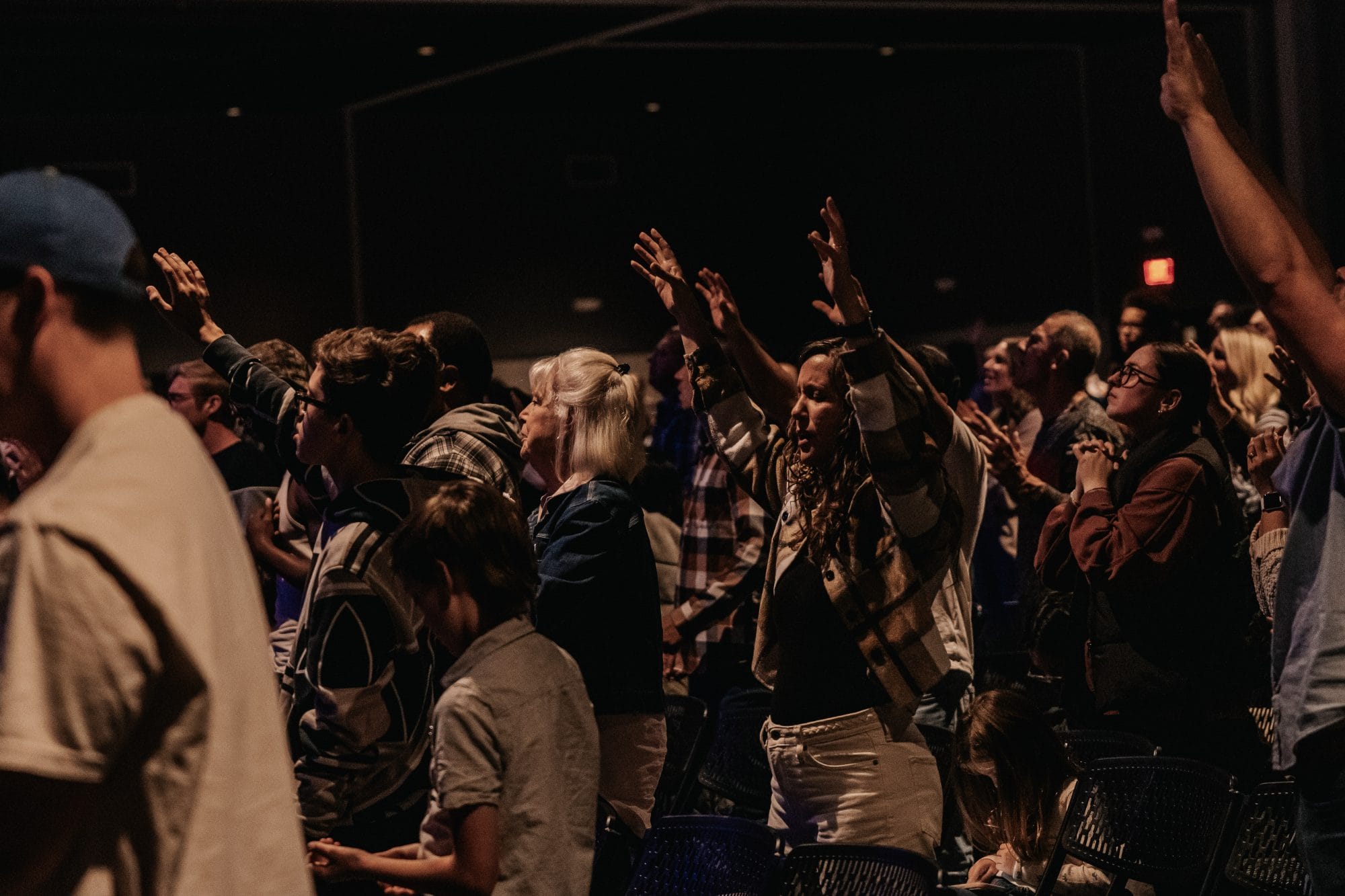
On February 8, 2023, a routine chapel service at Asbury University turned into an outpouring of the Spirit some have described as revival. Word of the continuous prayer and worship at Asbury went viral, drawing thousands from around the world. Media outlets covered the event. There were reports of healing, salvation, and re-dedications to Christ. This student-led movement lasted 16 days, culminating in the final service on February 23, 2023.
Bill Elliff, founding pastor of The Summit Church in Little Rock, drove to Wilmore, Kentucky, to discover for himself what was happening. In his reflections on Asbury, Elliff wrote:
Samuel Davies, the president of Princeton who was in the First Great Awakening, said that during that time, “the gospel became almighty and carried everything before it.” In that nationwide movement, 15% of the population of America came to faith in Christ. Whole towns reported that there were no adults left who were unconverted.
Asbury is not that yet, but it is a beautiful mercy drop. In these days of social media and rapid communication, the flame could spread quickly. Millions of desperate believers in our nation are crying out for the next nationwide spiritual awakening. Small outbreaks are happening everywhere.
Since 2023, a movement called Unite US has been organizing large evangelistic gatherings at public universities. At Auburn University, Florida State University, the University of Alabama, the University of Georgia, and the University of Arkansas, thousands of students have gathered, with hundreds baptized at each event, many in campus fountains and the backs of pickup trucks.
The movement began with one woman, Tonya Prewett, walking the Auburn University campus daily, praying to God for revival. She invited others to join her. From there, a small prayer gathering grew into something no one had expected. Prewett describes what she’s seeing in Unite Us as “a move of God that can only be explained by Him,” adding that students are “hungry for truth and hope.”
CityChurch Network President Ray Williams attended the Unite US event at Bud Walton Arena on the University of Arkansas campus. “In addition to the worship and praise, students heard the gospel of Christ proclaimed, and hundreds responded to the call for repentance and put their faith in Jesus Christ,” he recalls.
Witnessing the hunger of these college students for relationship with Christ filled my heart with joy and inspired renewed hope in this generation and the future of our nation.
Ray Williams
Jonathan Pokluda, a pastor at Harris Creek Baptist Church in Waco, Texas, spoke at the Unite Us event at the University of George. “The momentum is only building. From Asbury to Auburn, then Passion to Florida State, college students are wanting something more than church on Sundays or religious rituals,” he says. “Universities are pregnant with revival.”
Five Marks of True Revival
In “The ‘Quiet Revival’ That Never Was,” John Stonestreet reflects on what we are to make of the cultural shift we are currently seeing in our country.
We can be thankful for the ‘vibe shift’ that has left America in a much different place on a few consequential moral issues. […] We are witnessing younger generations reacting against the confusion, meaninglessness, and ideological totalitarianism of modern secularism. However, we ought to remember that rebelling against what is not true is not the same as embracing what is true.
Stonestreet highlights five marks of true revival, as identified by Jonathan Edwards, who witnessed the First Great Awakening firsthand as a pastor and theologian in Colonial America. According to Edwards, true revival is: 1) focused on Jesus Christ, 2) opposed to sin and evil, 3) grounded in the Bible, 4) promotes sound doctrine, and 5) produces love, humility, and unity among believers.
“If accurate, especially by that last mark, it would be premature at best to think we are experiencing a revival in America,” Stonestreet writes. He goes on to write that Edwards’ five marks teach us to be discerning so that we avoid two equal dangers—ungrounded emotionalism on one side and cynicism on the other.
Nevertheless, Christians should, in Stonestreet’s words, “expect God to be at work, and even to bring awakening. What a shame it would be to miss a movement of God because it came in a form we didn’t recognize, expect, or even worse, want. But we also must remember that we cannot manufacture what only God can do. Our place is to pray, to work, and to expect.”
Missionaries in a Foreign Land
In Being the Church in a Post-Christian Culture, S. Michael Craven writes:
It is, in large part, the Church’s present inability to both recognize the changing cultural context and to assert an all-encompassing view of the Christian faith and message that has rendered it irrelevant and left it confused about its purpose and mission. The American Church must begin to see itself as existing within a “foreign” land, and like foreign missionaries, properly contextualize its mission and faithfully proclaim and demonstrate God’s message.
The Church’s mission is not merely to survive or maintain its institutions. Rather, its goal is to be an instrument and witness of the gospel that declares that, in Christ, the rule and reign of God has come into the world. All of humanity is called to repent of their sins, submit to Christ as Lord, and enter into His kingdom and a new way of living.
How does the American Church live out the mission of God? Craven offers a three-fold approach, drawn from Scripture. First, “the Church demonstrates the rule and reign of God within a distinct community.” Second, “the Church serves the world by doing justice and meeting human needs through compassion and mercy, thereby setting right what sin has set wrong.” Finally, “the Church proclaims the message of the risen Christ as the only means by which one may enter the kingdom of God.”
The Church is to be living proof of God’s redemptive power at work in the world, both in individual lives and in communities. “This community, the Church, is intended to bear testimony to the restoration of fellowship with God and each other—a community of self-sacrificial love and support that stands in stark contrast to the fallen world,” Craven writes.
In The Decline and Renewal of the American Church, Tim Keller writes:
There is therefore a great need for a new Christian church movement that practices love and justice, that equips its members to do enormous good in society, YET at the same time resists the forces seeking to make it a political instrument; that speaks to and answers the great questions of the human heart and of the human race—of purpose, meaning, hope, happiness, guilt and forgiveness, identity—questions to which the secular culture cannot speak as powerfully.
Our vision for a renewed church cannot be simply for a restoration of Christian institutions to former states of strength. […] Our vision should be that the astonishing biblical possibilities for the church as the community of the Spirit would be realized in U.S. society in ways it never has before. The Church has been given divine power to radiate the infinite glory and goodness of God in our lives and relationships (2 Peter 1:3-8), renewing us in the image of Christ (Rom 8:29). It has the capacity to be a “new humanity”—a community of surpassing beauty (Eph 2:14-18; 4:15-16).
In turn, under the leadership of Christ’s Spirit, these churches have the ability to make their surrounding communities far better places to live (Matt 5:13-16; Luke 10:25-37; Gal 6:10) so that many are drawn to God’s beautiful glory (1 Pet 2:11-12; cf. Deut 4:5-8).
The next 250 years of America will be shaped by what churches in our communities do today. The signs of spiritual hunger are there. The opportunity is before us. But revival doesn’t happen without churches that pray, repent, and work together to reach a secular culture with the good news of Jesus Christ.
What’s needed is what missiologist Lesslie Newbigin called a ‘missionary encounter’ where the American Church neither escapes nor merely combats culture. Rather, it engages culture and demonstrates the love of God to win many to Christ and grow and flourish in society.
The Church has faced moments like this before, and the faith has outlasted every prediction of its demise. Christ said, “On this rock I will build my Church, and the gates of hell shall not prevail against it” (Matthew 16:18). That promise stands to this day.
The question for church leaders today is not whether God can or will bring renewal. It is whether we will be the kind of churches through which He does.
Bibliography
Barna Group. “Faith’s Shrinking Influence: What 25 Years of Data Reveals.” Barna, December 10, 2025. https://www.barna.com/trends/faiths-shrinking-influence/.
Barna Group. “New Barna Data: Young Adults Lead a Resurgence in Church Attendance.” Barna, September 2, 2025. https://www.barna.com/research/young-adults-lead-resurgence-in-church-attendance/.
Barna Group. “New Research: Do Americans Think Spiritual Revival is Coming?” Barna, March 30, 2026. https://www.barna.com/research/do-americans-think-spiritual-revival-is-coming/.
Craven, S. Michael. Being the Church in a Post-Christian Culture. Colorado Springs: Colson Press, 2025. https://colsoncenter.org/beingthechurch.
Elliff, Bill. “Reflections from Asbury.” TruthInk Publications, February 11, 2023. https://billelliff.org/blogs/news/reflections-from-asbury.
Gryboski, Michael. “A Move of God’: Thousands of Students Attending Revival Events, Hundreds Baptized.” Christian Post, April 9, 2024. https://www.christianpost.com/news/a-move-of-god-students-attending-revival-events-100s-baptized.html.
Keller, Timothy. The Decline and Renewal of the American Church. New York: Gospel in Life, 2022. https://quarterly.gospelinlife.com/decline-and-renewal-of-the-american-church-extended/.
Robertson, Abigail. “‘This Will Be Called the Greater Awakening’: Unite US Organizers Discuss Mighty Move of Holy Spirit.” CBN News, May 1, 2024. https://cbn.com/news/us/will-be-called-greater-awakening-unite-us-organizers-discuss-mighty-move-holy-spirit.
Stonestreet, John. “Is This Revival?” Breakpoint, Colson Center, October 6, 2025. https://colsoncenter.org/breakpoint/is-this-revival.
Stonestreet, John. “The Quiet Revival That Never Was.” Breakpoint, March 31, 2026. https://breakpoint.org/the-quiet-revival-that-never-was/.